
Legislation
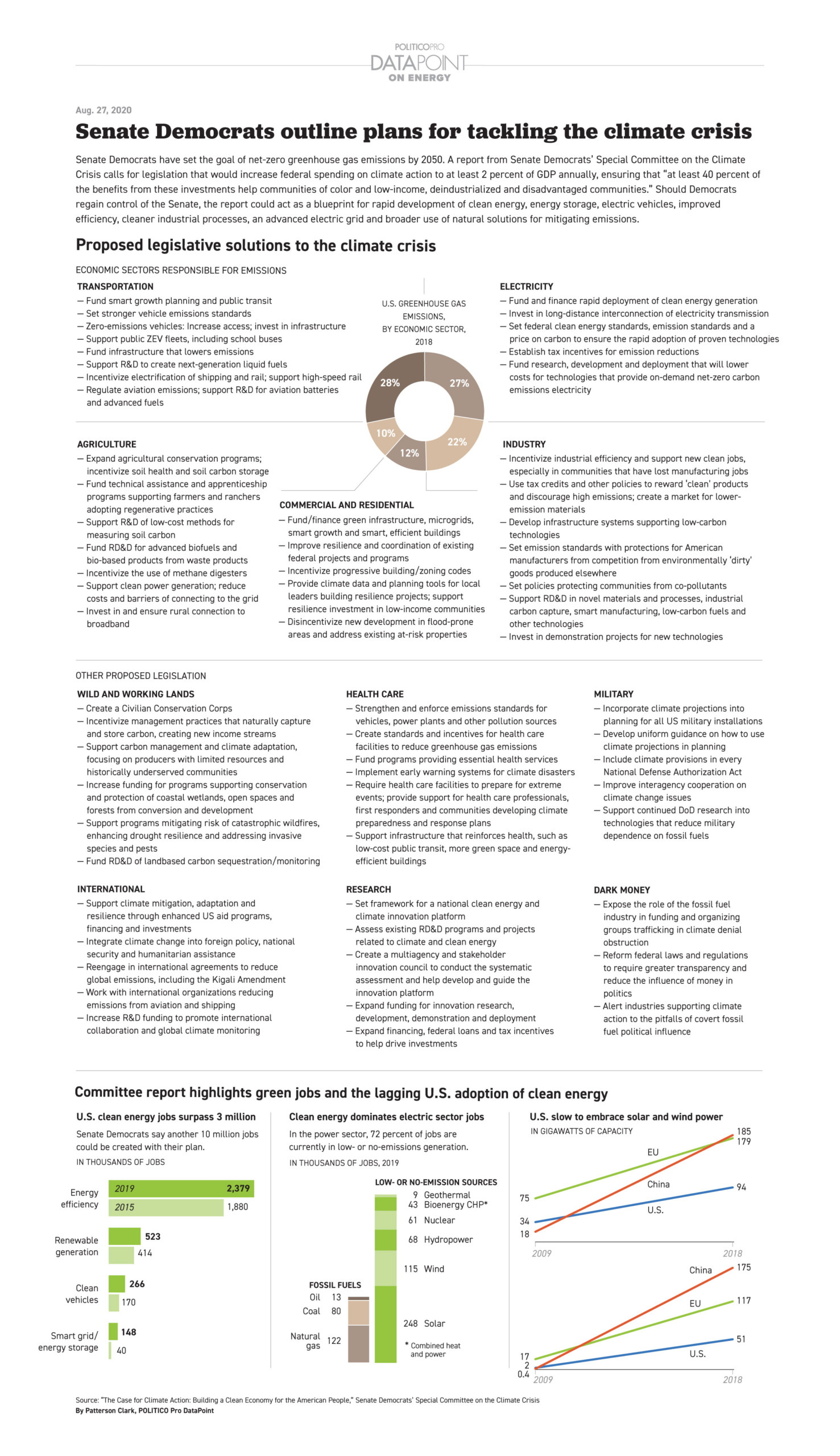
Senate Democrats Outline Plans for Tackling the Climate Crisis
Senate Democrats have set the goal of net-zero greenhouse gas emission by 2050. A report from Senate Democrats’ Special Committee on the Climate Crisis calls for legislation that would increase federal spending on climate action to at least 2 percent of GDP annually, ensuring that “at least 40 percent of the benefits from these investments help communities of color and low-income, dendustrialized and disadvantaged communities.”
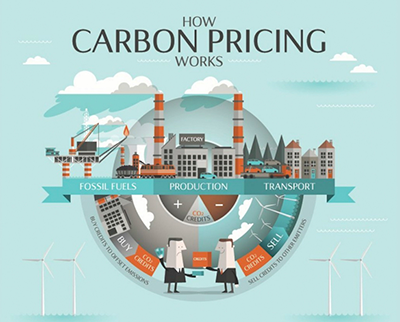
Carbon Pricing Proposals:
Many economists say that pricing carbon is the most efficient way to reduce greenhouse gas emissions. The House of Representatives passed, but the Senate declined to consider, a bill to create a national cap-and-trade system in 2009. Congress’s attention has now turned to a different form of pricing — a carbon tax added to the price of fossil fuels. Nine different bills have been introduced in the 116th Congress. See the Resources for the Future’s Carbon Pricing Bill Tracker for explanations of each bill. In addition, researchers in the Earth Institute at Columbia University have proposed a different, and they say superior, way to determine the social cost of carbon. They call it “near-term to net zero pricing“. They explain, “The Near-term to Net Zero approach estimates the carbon prices needed for consistency with a pathway to a net-zero emissions target, or the point where the overall balance between emissions produced and emissions taken out of the atmosphere equals zero. It uses the reliable information we have now and avoids the uncertainties of long-term changes we can’t predict.”
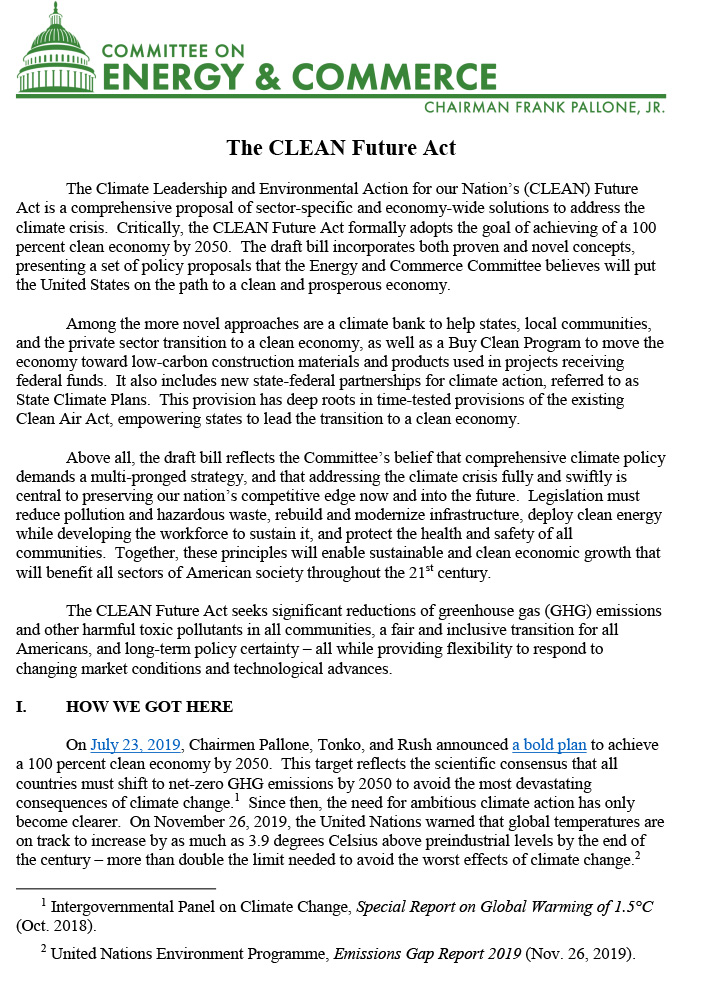
The Climate Leadership and Environmental Action for our Nation’s (CLEAN) Future Act
The Climate Leadership and Environmental Action for our Nation’s (CLEAN) Future Act: Issued by the House Committee on Energy and Commerce, one of the two committees in Congress working constructively on climate legislation. The Committee framed the bill after sending out a national call for proposals and conducting a series of public hearings. The bill includes the net-zero by 2050 target and directs federal agencies to mobilize their existing authorities to help achieve the goal. Unlike many other proposals, the legislation is “technology-neutral”, meaning it doesn’t specify what types of energy sources would qualify for contributing to net-zero carbon.
Green Act
Green Act: House Democrats introduced a sweeping bill on June 25, 2020, to extend and expand a variety of clean energy tax incentives. The so-called Green Act, extends credits for wind and solar power, plus energy efficiency, and it extends the incentives to energy storage. The bill raises limited on the electric vehicle tax credit and supports the expansion of EV charging facilities. It also proposes a new environmental justice tax credit.

The House Select Committee on the Climate Crisis
The House Select Committee on the Climate Crisis, created last year by Speaker Nancy Pelosi, has issued its long-awaited action plan for a clean energy economy. The 500-page document calls on Congress to set economywide targets for net-zero emissions no later than 2050; net-native emissions in the second half of this century; and ambitious environmental justice efforts in communities. It would create incentives for domestic manufacturing and rapid deployment of the technologies to achieve these goals; develop a national plan to prepare for climate-related physical and mental health risks ; limit fossil fuel leases on public lands; protect at least 30% of all U.S. lands and ocean areas by 2030; reestablish the Civilian Conservation Corps; and a lot more.
National Clean Energy Standard
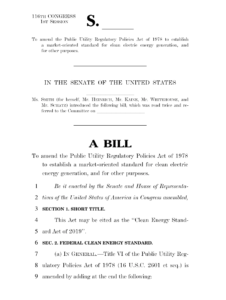
National Clean Energy Standard. This bill would create a market-oriented standard to create a net-zero emissions electricity sector in the U.S. by mid-century. Similar to a national-level Renewable Portfolio Standard (RPS), the bill would require every company that sells retail electricity to increase the amount of clean energy in its portfolio.. This would reduce greenhouse gas emissions from electricity generation nearly 80% by 2035 and to net zero by 2050 compared to 2005. The bill is endorsed by United Steelworkers, the Utility Workers Union of America, the Union of Concerned Scientists, the Clean Air Task Force, Minnesota’s Fresh Energy, and former Obama Energy Secretary Ernie Moniz. Resources for the Future estimates it would increase power from renewable resources from 30% to 56% of total generation by 2035 and increase nuclear power generation from 10% to 18% by the same year. Greenhouse gas pollution from the power sector would decline 61% by 2035.
Center for Energy and Climate Solutions Recommendations
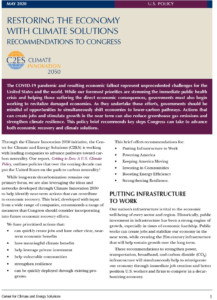
The Center for Energy and Climate Solutions has issued recommendations to Congress on climate solutions that would help repair the economic damages caused by COVID-19. Its brief contains specific legislative solutions on Putting Infrastructure to Work, Powering America , Keeping America Moving, Investing in Communities , Boosting Energy Efficiency, and Strengthening Resilience.
Presidential Climate Action Project
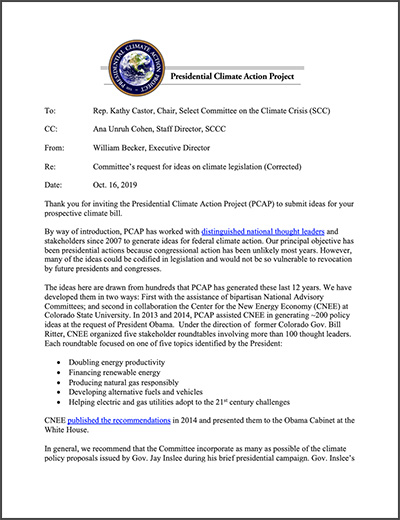
The Presidential Climate Action Project submitted detailed recommendations for Rep. Kathy Castor, Chair of the Select Committee on the Climate Crisis, on Oct. 16, 2019. PCAP described recommendations from roundtables involving more than 100 thought leaders convened by the Center for the New Energy Economy (CNEE) at Colorado State University on these topics:
- Doubling energy productivity
- Financing renewable energy
- Producing natural gas responsibly
- Alternative fuels and vehicles
- 21st century electric and gas utilities
PCAP assisted CNEE with the project.