
Policy Plans

Solar Futures Study
The US Department of Energy and the National Renewable Energy Laboratory issued a Solar Futures Study in September 2021. It reports that with aggressive cost reductions, supportive policies, and large-scale electrification, solar could account for as much as 40% of the nation’s electricity supply by 2035 and 45% by 2050.
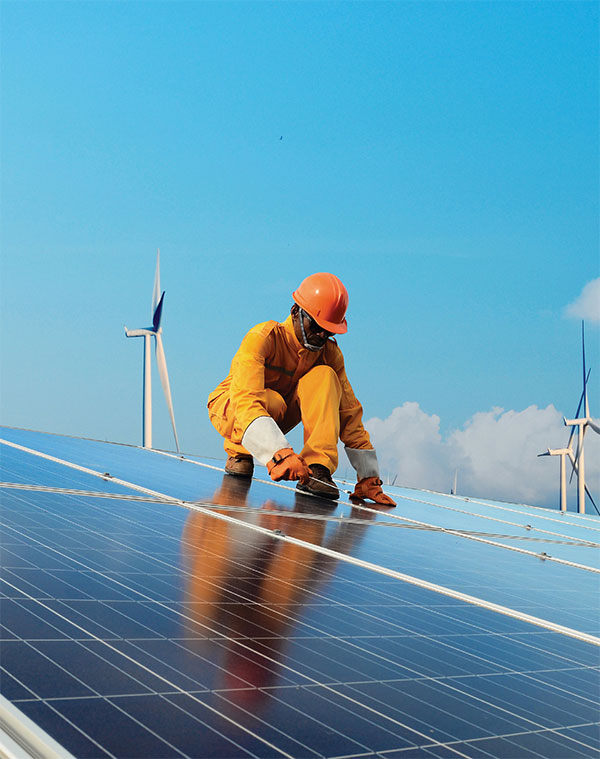
Fossil Fuel Exit Strategy
Researchers at the University of Technology in Sydney, Australia, have issued a “Fossil Fuel Exit Strategy.” They find that every region on Earth can replace fossil fuels with renewable energy to keep warming below 1.5ºC and provide reliable energy access to all.
Net Zero America. Potential Pathway’s, Infrastructure, and Impacts
“Net Zero America” provides granular guidance on what getting to net-zero requires and on actions to translate net-zero pledges into tangible progress. Princeton University and partner organizations used state-of-the-art modeling tools to create five different technologically and economically plausible pathways for the U.S. to reach net-zero emissions by 2050. The study provides sector-by-sector information on the timing and spatial distribution of changes in energy infrastructure, capital investment, employment, air pollution, land use, and other key outcomes at a state and local level.
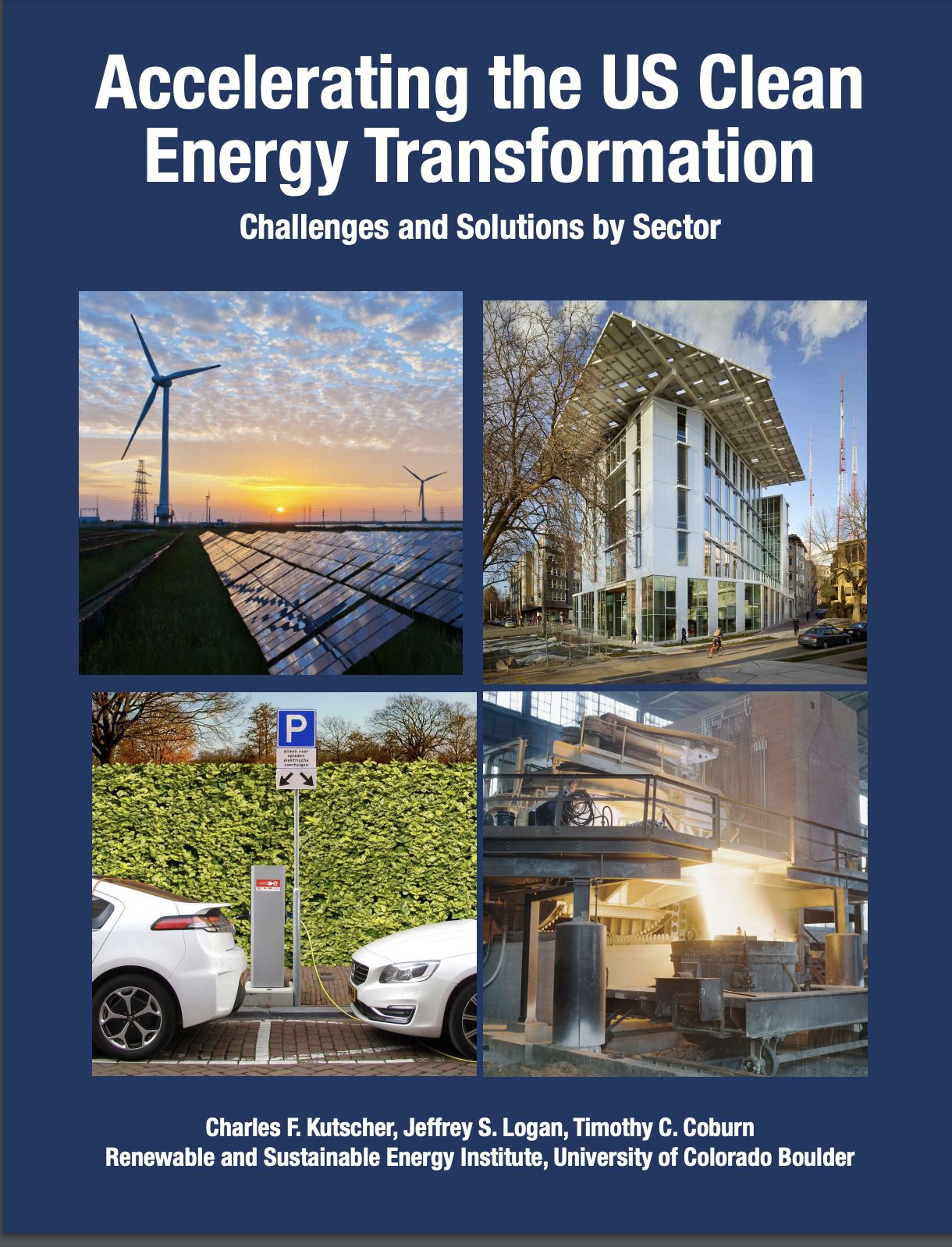
Accelerating the U.S. Clean Energy Transformation
Experts at the Renewable and Sustainable Energy Institute at the University of Colorado Boulder have published a report that describes how to speed up the transition to clean energy in four sectors: buildings, transportation, electric production, and industry. The report was peer-reviewed by specialists from several universities and organizations, including the National Renewable Energy Laboratory, the University of California-Davis, the Colorado School of Mines, and the University of Wisconsin-Madison. The report identifies policy options, their potential, and costs.
Accelerating Decarbonization of the U.S. Energy System
The National Academies of Sciences, Engineering, and Medicine have issued goals and policy ideas to speed up the US transition to a decarbonized energy system. It suggests that the nation generate at least 75% of its electricity from non-carbon-emitting sources, shoot for half of new vehicle sales to be EVs, and cut building energy use in half, all by 2030.

Ceres Roadmap 2030
Ceres is a sustainability nonprofit organization workingwith the most influential investors and companies to build leadership and drive solutions throughout the economy. Through powerful networks and advocacy, Ceres tackles the world’s biggest sustainability challenges, including climate change, water scarcity and pollution, deforestation, and inequitable workplaces. Our mission is to transform the economy to build a sustainable future for people and the planet. For more information, visit ceres.org.

A 100 Percent Clean Future
A 100 percent Clean Future: This policy plan, from the Center for American Progress, builds on three pillars: a 100% clean future, a focus on workers, and environmental justice. Its goals are consistent with those in the Paris climate accord: net-zero greenhouse gas emissions by 2050 and net-negative emissions thereafter to keep global warming at 1.5oC or below.
The Ceres Blueprint for Responsible Policy Engagement on Climate Change
The Ceres Blueprint for Responsible Policy Engagement on Climate Change details how large U.S. companies should be structured to address climate change as a systemic financial risk and how to align their lobbying with science-based climate policy goals. The Ceres Blueprint calls on companies to Assess climate-related risks to the company, and the ways in which its lobbying efforts exacerbate or mitigate these risks; Govern to systematize decision-making on climate change across the company, including in all direct and indirect lobbying; and Act to align both direct and indirect lobbying with science-based climate policies.
Net Zero by 2050
Warning that the window is rapidly closing to prevent catastrophic climate change, the International Energy Agency has published a roadmap for the world to achieve net-zero carbon energy by 2050. The IEA calls on all nations to implement detailed milestones and goals — it lists 400 — including an immediate end to investments in fossil energy. As of this year, there is no need for new fossil fuel supply investments—oil, gas, and coal,” IEA head Fatih Birol, said on release of the document. He described it as “the most technically feasible, cost-effective and socially acceptable” path to eliminating global greenhouse emissions by 2050 and keeping global temperatures from rising more than 1.5°C. “
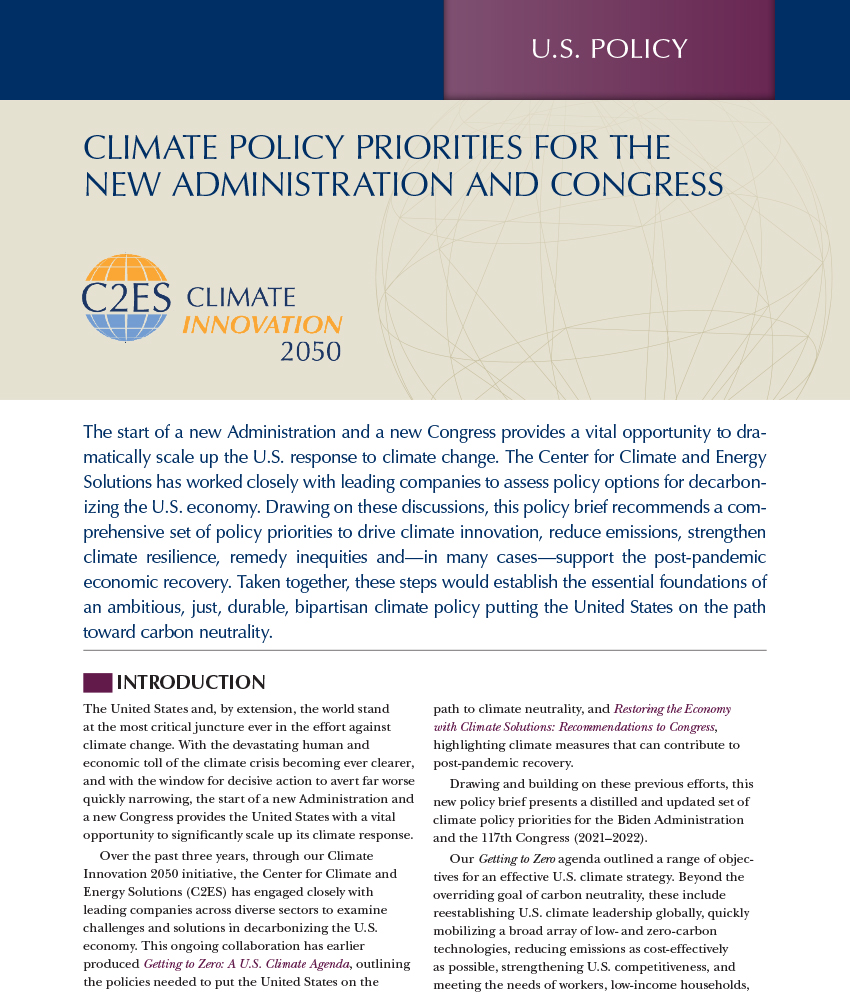
Climate Policy Priorities For The New Administration and Congress
The Center for Climate and Energy Solutions has worked closely with leading companies to develop these recommendations for the Biden Administration and Congress to drive climate innovation, reduce emissions, strengthen climate resilience, remedy inequities, and support the post-pandemic economic recovery.
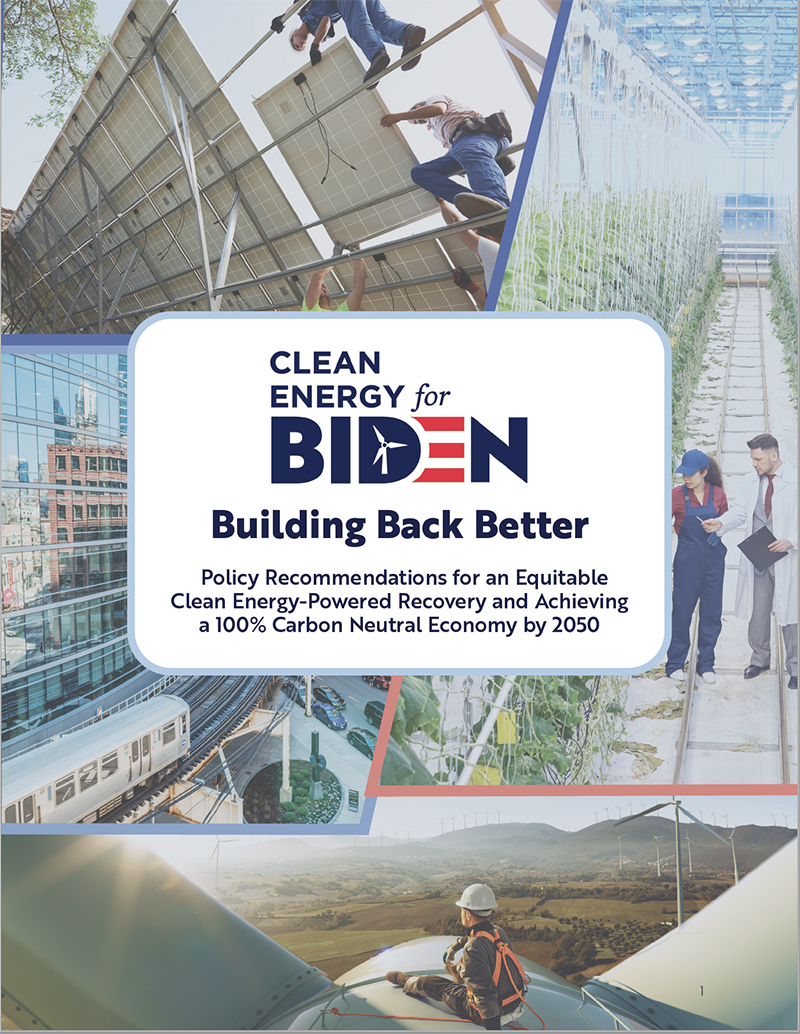
Building Back Better Plan
More than 200 leaders from business, policy organizations, the finance sector, and government collaborated in 2020 to develop a Building Back Better Plan to support President Biden’s goal for a carbon-neutral U.S. economy by 2050. The plan, which consists of 48 policy papers, offers recommendations on clean-energy job creation, climate justice, low-emissions transportation and infrastructure, and financial investment.
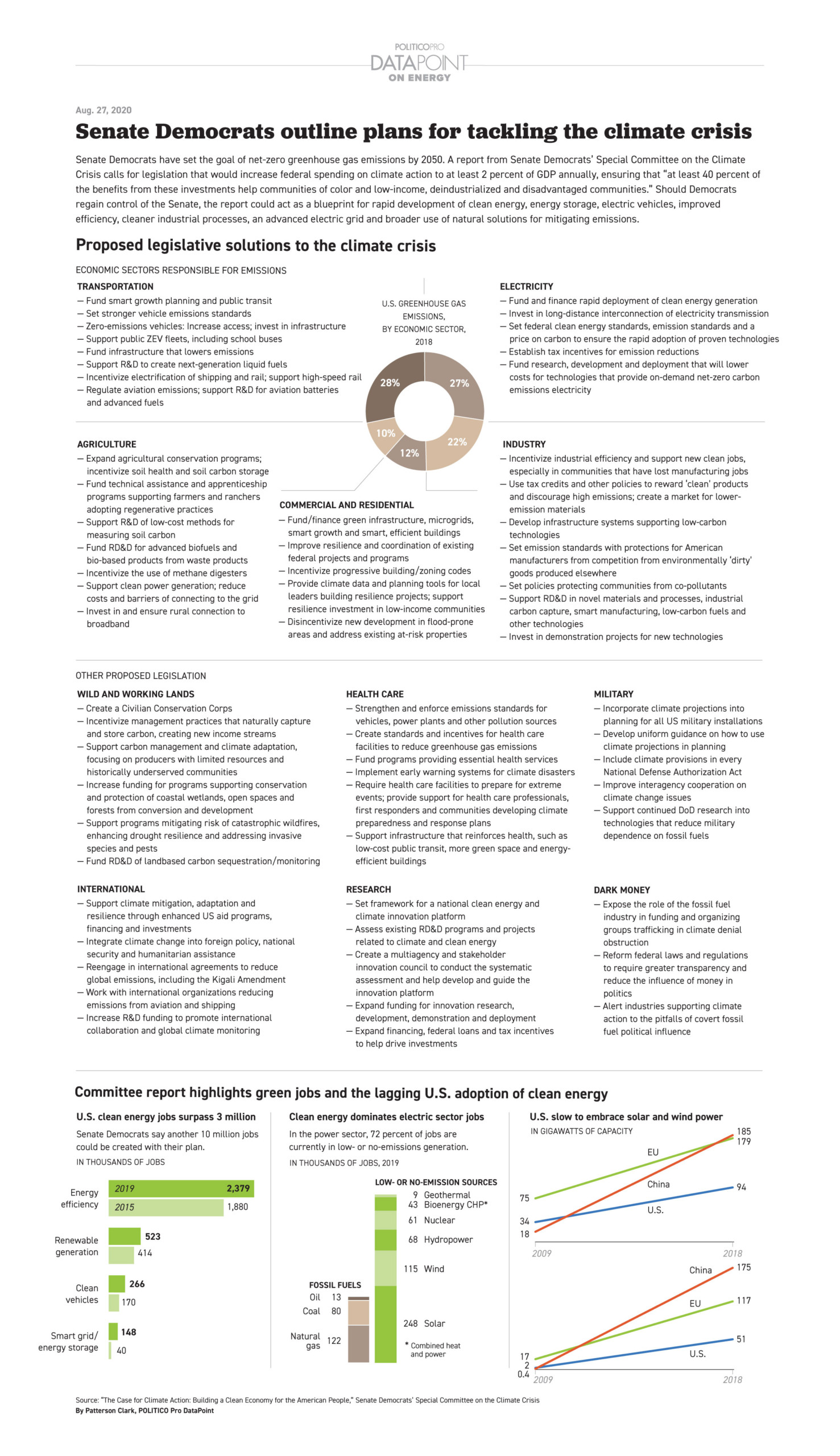
Senate Democrats Outline Plans For Tackling the Climate Crisis
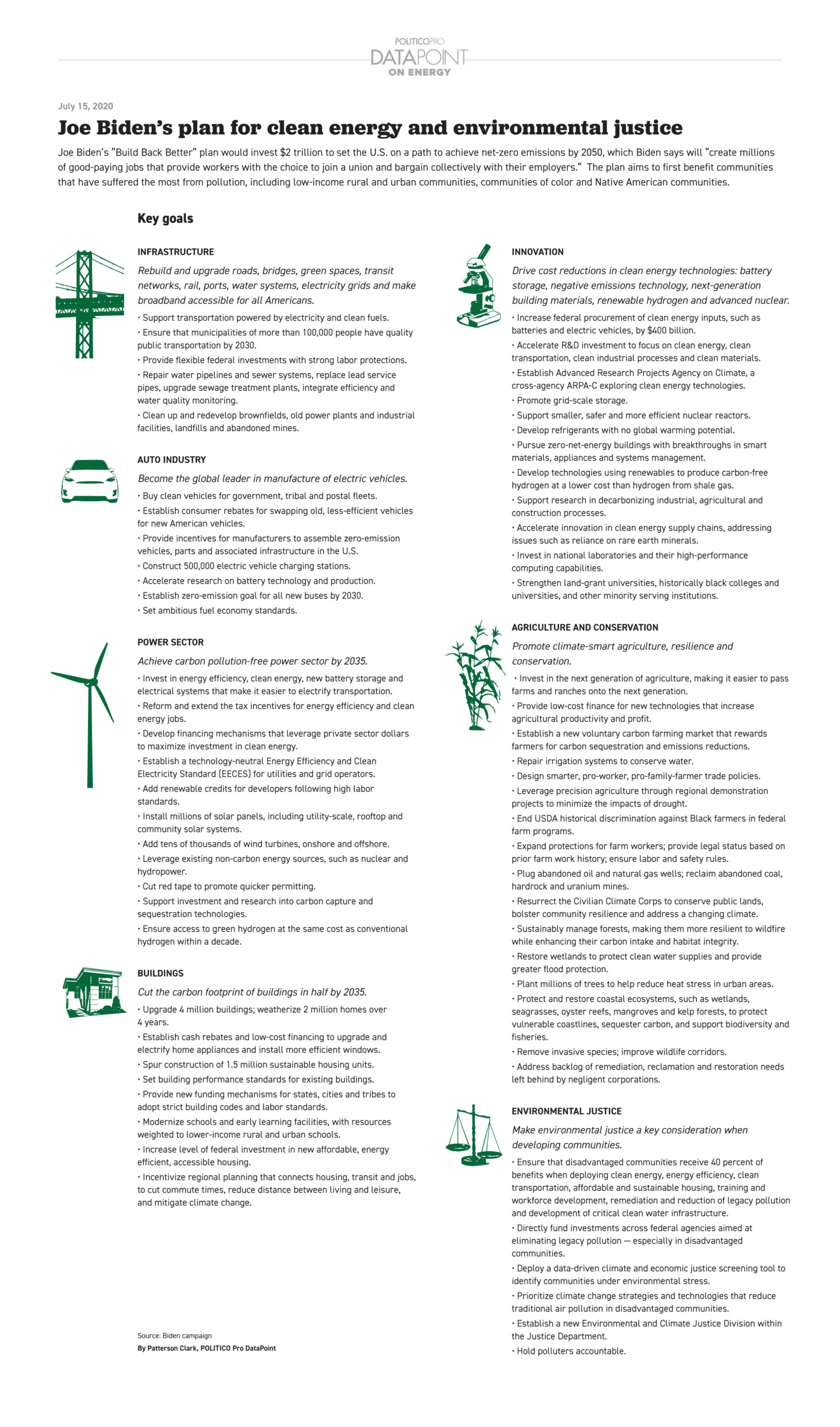
Joe Biden’s Plan For Clean Energy and Environmental Justice
The Case For Climate Action
Democrats in the U.S. Senate have issued their “Case for Climate Action”, a 200-page report with scores of recommendations on how Congress can help the United States stabilize the climate and adapt to the damages that already are inevitable from global warming. The report — from the Senate Democrats’ Special Committee on the Climate Crisis — has comprehensive and useful descriptions of how climate change is affecting every major sector in the U.S., as well as current data on climate impacts and clean energy developments around the country. Even apart from its many recommendations, the report is important reading.

Proposed Biden Campaign Policies
Several committees created by the Biden campaign have released the policies and goals they think Biden should embrace in six areas: climate change, health care, immigration, education, the economy and criminal justice. The climate committee was charged with developing a “unity” platform that defines common ground between Biden’s current climate platform and the more aggressive goals advocated by Sen. Bernie Sanders. At this point, the recommendations on all six topics are just that: recommendations for Biden to consider. The co-chairs of the climate committee were Rep. Alexandrea Ocasio-Cortez, who introduced the Green New Deal in Congress, and former Secretary of State John Kerry, who was intimately involved in negotiating the Paris climate agreement.
Biden’s Environmental Justice Plan:
The Biden campaign has released the former Vice President’s plan to better ensure environmental justice in the U.S. The six-page plan says President Biden would use an inclusive and empowering All-of-Government approach, make decisions driven by data and science, target resources in a way that is consistent with prioritization of environmental and climate justice, and address risks to communities from the next public health emergency.
Biden’s Clean Energy and Infrastructure Platform:
The Biden campaign has announced a four-year plan to invest $2 trillion in clean energy. The investments would make buildings more energy efficient, boost sustainable jobs in communities of color, and expand electric transportation. More specifically, the plan includes targets such as a zero-emissions goal for American-made buses by 2030; rebates to swap older cars for electric, hybrid or hydrogen-fuel vehicles; a clean-electricity standard that would eliminate power sector carbon emissions by 2035; energy retrofits for 4 million homes; the weatherization of 2 million homes; 1.5 million sustainable housing units; the revitalization of brownfields; jobs for 250,000 workers to plug abandoned oil and gas wells and reclaim mines; more finance for new farming equipment; and a voluntary carbon-farming market to incentivize agricultural greenhouse gas reductions.

Democratic Party’s 2020 Platform
The Democratic Party’s 2020 platform calls for the immediate reversal of Donald Trump’s “dangerous and destructive rollbacks of critical climate and environmental protections”, and re-entry into the Paris climate accord. It supports the goals of net-zero greenhouse gas emissions no later than 2050, and eliminating carbon pollution from power plants by 2035 with “technology neutral” standards. The Platform promises to install 500 million solar panels, including eight million solar roofs and community solar energy, along with 60,000 wind turbines, within five years. Other commitments include reducing methane pollution; providing financial support to improve the electric grid including in rural and Tribal areas; achieving net-zero GHG emissions in all new buildings by 2030; retrofitting 4 million buildings; establishing strong emission standards for clean cars and trucks; and accelerating the transition to zero-emission vehicles. Unlike Vice President Biden’s climate plan, however, the Platform does not call for an end to fossil energy subsidies.
National Economic Transition Platform
National Economic Transition Platform. Local leaders in America’s coal communities are developing solutions that tackle the climate crisis and create equitable and sustainable economic growth from the ground up. The National Economic Transition Platform has been developed by local, tribal and labor leaders to build sustainable, resilient and equitable economics for the people and places hit hardest by the changing coal economy. Its sponsors are the Just Transition Fund, Appalachian Voices, the Bluegreen Alliance and the Center for Coalfield Justice.

The Climate and Security Advisory Group
The Climate and Security Advisory Group, whose members include distinguished retired senior military officers and national security experts, has published recommendations for the President of the United States to integrate climate change into national security policy and agencies in the federal government. Among the Group’s proposals are an economy-wide policy to avoid catastrophic security consequences of climate change, and plans to improve climate resilience and clean energy use in key foreign countries to prevent the destabilization of fragile states.
Poor People’s Campaign
Poor People’s Campaign: This campaign, which continues the work of Dr. Martin Luther King, livestreamed a national rally on June 20 to call for action on a list of detailed demands including the immediate restoration and expansion of the Voting Rights Act; equal pay for equal work; a change in poverty standards based on housing, education, healthcare and other fundamental services; and end to inequalities in the criminal justice system; a 100% clean, renewable energy and public jobs program as the United States transitions to a green economy; and many other public policies grounded in our “deepest religious and Constitutional moral commitment to justice”.
Climate Policy in Democratic Party Platform
The Democratic Environment and Climate Crisis Council, established to push the Democratic Party to take bold and urgent action on the climate crisis and other environmental issues, is recommending a sweeping set of policies for the 2020 Democratic Party platform. The broad recommendations, each followed by more detailed proposals, are: 1) Take urgent action on the climate and environmental emergencies; 2) Put communities and working families above fossil fuel corporations by ensuring a just transition and building a green economy with millions of new, family-sustaining jobs; and 3) Support the growth of healthy, just, sustainable green communities and address the disproportionate environmental and climate harms to frontline and vulnerable communities.
Vision for Equitable Climate Action
Vision for Equitable Climate Action: Developed by a coalition of 175 climate organizations under the auspices of the U.S. Climate Action Network (USCAN). It calls for an equitable transition to 100% renewable energy by 2030, a phase-out of nuclear energy, an end to subsidies for polluting fuels, zero emission from the transportation sector by 2050, and many more proposals in the buildings, agriculture, public health, utility and aviation sectors. The proposals will be the basis of a new climate advocacy campaign called Arm in Arm.

Climate Power 2020
Climate Power 2020: This campaign plans to change climate politics by fighting back against Trump Administration “disinformation and false facts.” Its members are veteran political strategies, digital organizers and activists, and its advisors include well-known figures such as former Secretary of State John Kerry, former EPA Administrators Carol Browner and Gina McCarthy, former Obama Chief of Staff John Podesta and many others. The group is focusing its work on Arizona, Colorado, Florida, Georgia, Michigan, North Carolina, Pennsylvania and Wisconsin.
Federal Policies to Slash Greenhouse Gas Emissions
Federal Policies to Slash Greenhouse Gas Emissions: Energy Innovation Policy and Technology LLC has issued a list of federal policy recommendations to put the United States on the path to a decarbonize economy by mid-century. The plan calls for a 100% national clean energy standard; expanded tax credits for solar energy, wind power and storage; and actions by the Federal Energy Regulatory Commission (FERC) to remove barriers to clean energy; and other ideas for federal procurement; industry; buildings; transportation; agriculture; rural America; carbon pricing; and R&D.

Evergreen Action Plan
Evergreen Action: The team that put together Gov. Jay Inslee’s climate action plan – considered the “gold standard” of climate policies during the 2020 presidential campaign – has reshaped into an 85-page action plan. Then, Evergreen Action and Data for Progress issued a $1.5 trillion green stimulus plan, A Clean Jumpstart for America, to make renewable energy and environmental justice a centerpiece of post-pandemic recovery.
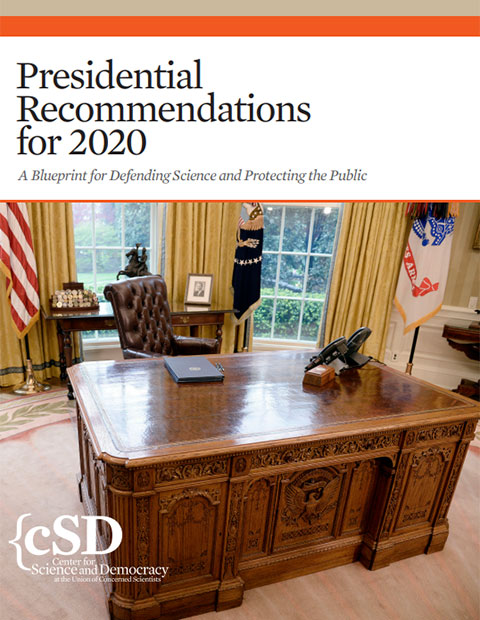
Blueprint for Defending Science and Protecting the Public:
Blueprint for Defending Science and Protecting the Public: This set of proposals for the next president was created by the Center for Science and Democracy at the Union of Concerned Scientists. It catalogues the Trump administration’s attacks on science and offers recommendations on new policies to protect federal scientists and their work.

Climate-Smart Agriculture Policies
The North America Climate Smart Agriculture Alliance (NACSAA) has submitted policy and program recommendations from agriculture and rural leaders to the Senate Democrats’ Special Committee on the Climate Crisis. The recommendations are the result of a collaborative effort by NACSAA’s partners to call attention to the profound and critical role agriculture plays in bridging gaps in policy arenas – from food security and nutrition, to energy and national security, to rural development and job creation, to environmental protection and climate mitigation.